
小丈夫
China’s market structure improves in H1 as AI, robots drive emerging industries_我的网站

一 |
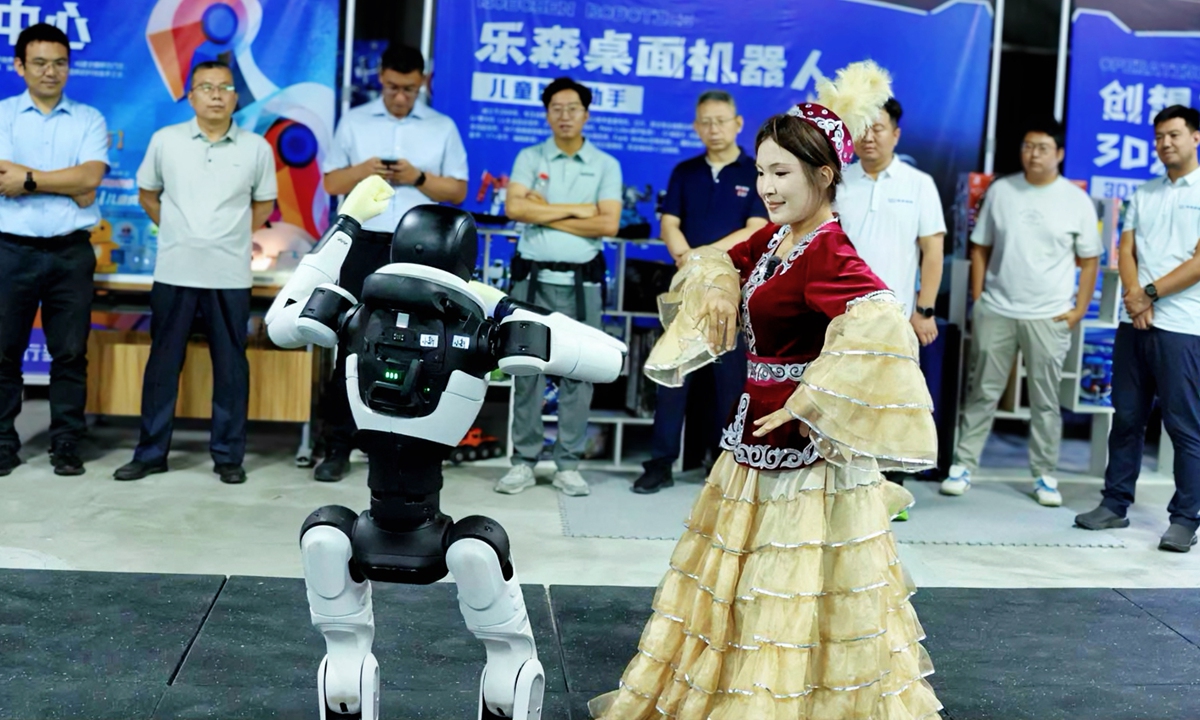
China's market landscape experienced a structural optimization in the first half of 2026, powered by a lineup of emerging and future-oriented industries.
Official data from the State Administration for Market Regulation (SAMR) shows 561,000 new enterprises were registered across China's strategic emerging and future industries, spanning next-generation information technology, high-end equipment manufacturing, generative artificial intelligence (AI) and humanoid robotics.
The rapid expansion of these new market players is revamping China's industrial layout and fast-tracking the cultivation of new quality productive forces, underpinning steady high-quality economic upgrading, experts said.
Cutting-edge technology sectors stood out as the brightest growth spots, posting explosive year-on-year expansion. The generative AI industry recorded a 28 percent surge in new start-ups with 55,000 newly established firms, while the humanoid robot sector saw a 9.5 percent rise, adding 116,000 new enterprises.
"It shows that China's innovation momentum is exceptionally strong and remarkably broad-based — a trait that is virtually unique in the global landscape," Chen Jing, a vice president of the Technology and Strategy Research Institute, told the Global Times on Sunday. "The explosive growth of new enterprises in AI and robotics reflects the extraordinary depth and diversity of China's industrial ecosystem."
Outside high‑tech sectors, 3.957 million new services‑sector enterprises were established and booming emerging‑consumption businesses injected fresh impetus into domestic demand, the SAMR said.
The number of new firms in software and telecommunications services rose 3.3 percent to 322,000. Inspection‑and‑testing businesses soared 43.9 percent, and entities dedicated to the commercialization of scientific‑research achievements climbed 6.8 percent to 459,000.
Manufacturers accelerated industrial upgrading with companies moving up the value‑chain ladder, the SAMR said.
High‑end equipment industries have maintained growth during the first half, with 28,000 newly registered firms and a year‑on‑year increase of 2.5 percent.
A total of 330,000 high‑tech‑manufacturing enterprises were operating as of the end of June, including 15,000 newly established ones. Start‑ups engaged in the production of spacecraft and launch vehicles rocketed 185.7 percent. New producers of fiber optic cables climbed 129.4 percent and integrated‑circuit businesses increased by 24.2 percent.
"We are witnessing a dual-engine growth model, where new consumption in the services sector and high-tech services reinforce each other, while the digital and real economies integrate at an accelerating pace. At the same time, the intelligent transformation of manufacturing is picking up speed," Chen said.
The dividends from this industrial transformation are generating a powerful multiplier effect, creating a virtuous cycle led by innovation, Chen noted.
"The first‑half growth and structural shifts among China's market‑based businesses mirrored the country's overall economic momentum and industrial makeup. New‑emerging sectors, core strategic pillar industries and forward‑looking future industries registered the fastest business expansion," Tian Yun, a veteran economist, told the Global Times on Sunday.
These solid achievements fully reflect the success of China's innovation-driven economic strategy.
Strong policy support for specialized, sophisticated, unique and innovative enterprises has fueled this industrial boom while these market players have helped China shore up, upgrade and extend its industrial chains, Tian noted.
This business boom lines up with this year's stellar foreign trade figures, Tian noted.
China's exports rose 23.9 percent year-on-year in dollar terms in July, data from the General Administration of Customs showed on Friday.
Exports of high-tech products, including industrial robots and 3D printers, surged by more than 50 percent year-on-year, outpacing the 39 percent growth recorded in the first half of the year, according to the Xinhua News Agency.
The growing pool of high‑quality market players signaled lasting improvements in China's global competitiveness, industrial upgrading capacity and the standard of goods and services. Broader product ranges, better‑made commodities and improved supporting services will deliver durable new‑growth momentum, Tian noted.
。
[ 资讯] 6月6日,2026款零跑C16(参数|询价)开启预售,新车共计推出6款车型,预售价16.98-18.98万元,新车正式开启预订。新款车型纯电续航增加,全系标配激光雷达,并对舒适配置进行升级。2026款零跑C16延续现款车型的外观与内饰设计,此次除了继续保留6座版车型之外,还推出了5座版车型,后排的空间会更大。主驾座椅增加腰部支撑调节,前排、第二排增加座椅按摩功能。
。现款C16
现款C16
2026款零跑C16全系标配128线激光雷达,换装高通骁龙8650辅助驾驶芯片,实现端到端辅助驾驶,新增记忆泊车功能。现款C16
动力方面,仍然有增程车型和纯电车型。增程车型继续使用1.5L增程器,纯电续航从200km提升至280km,增程车型充电时间更短,30%-80%充电时间缩短至0.32小时,增程车型综合功率仍为170千瓦,最大扭矩320牛·米,保持不变。纯电车型续航从520/580km统一提升至630km,电机功率稍有提升,提升至220千瓦,最大扭矩仍为360牛·米,由于电池变大,充电时间变为30%-80%用时0.3小时。(文/ 秦超)
二 |
Current article:http://8p03jm.cuiguagonggengaotianwan.shop/list_10ia/bwai1rg.html
Published on:22:27:56
 湖北发布高温预警:明日,武汉、鄂州、黄冈、黄石、孝感、随州、荆门、宜昌、恩施北部最高气温将达37℃以上
 “长跑之王”说出真相:我从小被贩卖到英国
 【现货】8月18日各地区合成橡胶现货市场价格汇总
 演唱会背后 看见济南的城市温度
 又是下雨天!气象部门已发布多个预警
 山西发布地质灾害黄色预警
我的网站最新内容
- ·哥伦比亚大学因造假“翻车”,美高校排名评级体系引质疑
- ·“水源严重污染,鱼类漂浮成灾”?青岛警方:造谣者被刑拘
- ·最新六个月期国库券收益率降至3.13%
- ·NHRC notice to Kerala over human sacrifice
- ·Aaj Ka Love Rashifal 28 August 2025: पार्टनर से करेंगे दिल की बात, जानें इन 4 राशियों की लव लाइफ हाल
- ·欣锐科技:聘任王世文为公司内审部负责人
- ·Janet Jackson's 1989 Hit 'Rhythm Nation' May Literally Crash Laptops, Microsoft Says
- ·记者:拜仁小将查韦斯将租借加盟马格德堡,含买断+回购选项
- ·राजस्थान में बाढ़ का कहर, बालोतरा में बोलेरो बही, जालोर में कई डूबे
- ·北岛突发地震!近13000人有震感
- ·走在乡间小路上丨太行鸡鸣土岭上
- ·出海“必争之地”:中国新能源车企立足新加坡开启全球化新模式
- ·苹果诉OpenAI未点名Jony Ive
- ·美债突破 40 万亿!收益率创新高,特朗普放大招:美债的尽头是美军,栗頿,原创 美债突破 40 万亿!收益率创新高,特朗普放大招:美债的尽头是美军
- ·罕见!抽签决定晋级,中国U17女足3连胜无缘决赛
- ·国产大作神了,捷报频传!老外直呼中国游戏做的比美国腾讯好
我的网站热点内容
- ·苹果首款折叠手机:iPhone Ultra 主板曝光,内置最强 A20 Pro 芯片
- ·奥克兰高峰时段发生激烈追逐:逃逸车辆逆行险象环生,两人被捕
- ·英媒:美国人工智能公司正受到中国对手的威胁
- ·见证中国汽车出海“新征程”,2025香港车博会正式启幕
- ·明起大转折!杭州强降雨进入尾声 部分地区仍需注意
- ·2026年第5场全国桥牌通讯赛圆满完成
- ·Stein:科沃尔工作4年后与老鹰友好协商离任
- ·周冠宇获得奥地利站参赛许可 回忆撞车事故细节
- ·신한금융, 비자(VISA)와 손잡고 스테이블코인 금융 실험 나선다
- ·《人民日报》评论:我喜欢“满脸大哭”,但我不是00年代后的一代。
- ·受台风“梅花”影响 山东日照9月15日停课一天
- ·《黑神话:钟馗》最新发现:大蚌真君疑似厨娘帮手!收入麾下?
- ·FBI Mar-a-Lago Raid Likely to Boost Trump’s Comeback Campaign - Experts
- ·称以“占领”戈兰高地,美特使纠正“失言”
- ·「えっ」「すっぴん?」 41歳・松本若菜、美肌アップにネット騒然「美人すぎる」「か、かわいい!!」
- ·绥化体彩开展环保志愿服务活动